The rain came

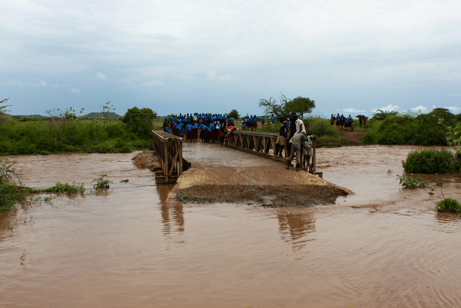
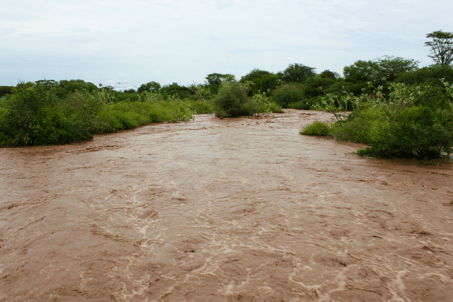
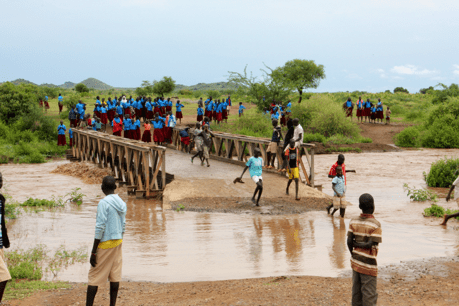
We prayed for rain and it came. Torrential and like nothing I’ve ever seen before. Classes in the morning were cancelled and at midday the rain had eased so I donned my gum boots and went to see the water in the river. Each day, I walk to school along the river bed. Yesterday, that river bed lay under 8 feet of the most terrifying torrent of water gushing at such a speed Any boy or girl unfortunate enough to fall in would be swept away and drowned. Sadly, that was the fate of one man in the village. From what I hear his body has not yet been found.

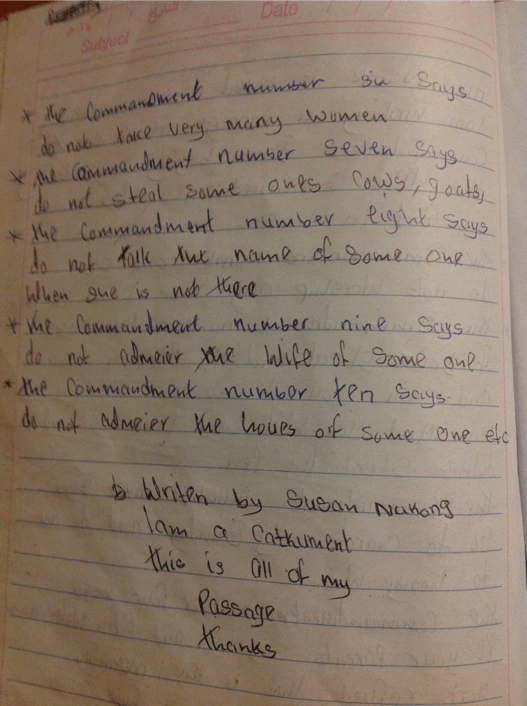
Catechumens first homework assignment

As well as teaching maths to standard 7 and 8 in St. Bakhita Girls Primary School, I also help with the preparation of the candidates for Baptism and Communion. The girls range in age from about 4 years old to 15 years.

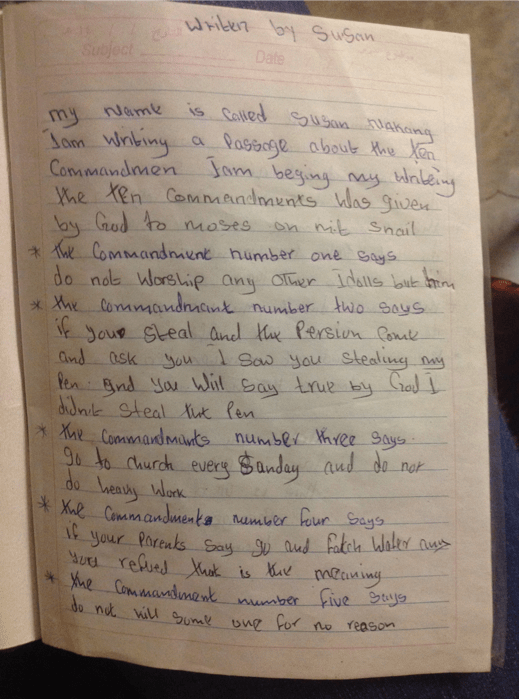
Our first class was last week and while the girls could recite the Ten Commandments, they seemed to have little comprehension about what they really meant or where they came from. So, I set homework for the girls which was presented to Anne Grace and I yesterday and we just had to share!

Our of the 30 or so girls who were present in the class, 5 completed the homework I set. This is a pretty impressive statistic. Homework is a very foreign concept here, I mean they know what it is but just don’t bother as a rule.

Of the 5 assignments returned to us, 3 were exactly the same…even the spelling. They were also a pretty alternative take on the Commandments….It’s been a while since I learned the Commandments but I’m pretty sure the second Commandment has something to do with using the Lords name in vain rather than more specifically dealing with stationary theft.

I really hope you can see these pictures – if not, please someone leave me a comment and I will transcribe them.

And then it rained…

This part of South Sudan is dry…so very dry and hot. I walk to school every day through the river bed. There is so rarely water in the rivers that the roads run straight through. Even if there was money to build bridges, I can’t imagine they would bother in most cases. There is one bridge in Narus and conveniently it is just a little further up the river from where I cross. So, when it rains I can take the bridge to school instead.

It rained last Saturday morning. Tim and I drove to the church for mass at 7am. Sometime around the second reading the heavens opened. The rain fell against the tin roof completely drowning out every word Fr. Tim said. And the the win added to the drama. Gusts blew great torrents of water through the ventilation space in the roof of the church drenching us all. So we moved to the other side of the church and continued.

Just after Communion, there was an almighty crashing noise. It sounded as though something had crashed against the metal door of the church. Or very loud gunfire maybe. By the time I reacted I saw that my girls from standard 8 were already under the pews looking terrified. We all giggled when we realised that we’d all had such a fright from a clap of thunder. From where Fr. Tim sat he could see the lightening strike almost immediately outside the church.

What struck me deeply though was that this was not the first time the girls had run for cover like that. They  grew up in South Sudan during the war. Narus was bombed many times. The girls were accustomed to hearing jets overhead from Khartoum and knew the signal to sprint to their designated bunkers. There are bunkers everywhere. There are at least three in our compound and many more in the girls primary school. I thought how fortunate I was that the reality of my childhood was so very different to theirs.

By the time we were ready to leave, the pickup was full of my students and we took off. We dropped the girls off at the bridge and continued the short distance to our compound. When it rains here, the road turns to mud often several feet deep. And then we got stuck! Tim declared it so matter of factly that there didn’t seem any point encouraging him to try again!

I got out of the pickup to investigate and I established that if we could just move one large stone we should be able to proceed. So…when my girls returned to see what all the commotion was about, they found their maths teacher barefoot in a foot and half of mud trying to loosen a big stone from under the pickup. Needless to say they thought this was the funniest thing they were likely to see all week!!

Anyway, my efforts were futile and we ended up calling Mongi (our mechanic) to come with the tractor and save us. When a task seems just too large, a man on a Massey Ferguson can always fix it!!

It rained on Wednesday too but I’m afraid it wasn’t quite such a giggle. It rained quite heavily for about 3 hours from 5am. I made it to school safely through the mud but on my way back to the compound after my morning classes I met Sr. Agnes who told me that there had been an accident.

About 20 Toposa women had stayed at our compound for two nights. They had been in Kenya and Uganda to have peace talks with the Turkana and the Karamajong. There is a long history of violence and war between the three tribes. They had a good trip and productive discussions.

Their villages are about 6 hours drive into the bush from Narus. They travelled in the back of a truck. Apparently the truck hit a pothole which was actually mud many feet deep and the truck toppled over. The women were thrown from the back of the truck.

It is a miracle that no one died or suffered more severe injuries. Two doctors were dispatched from ARC (American Refugee Centre) and the driver from our compound left in another truck. Three women were admitted to the government clinic and the others returned to our compound to rest after their ordeal.

Life is back to normal now after the rain….but my Daddy was (as always right)….I should have packed my wellies!

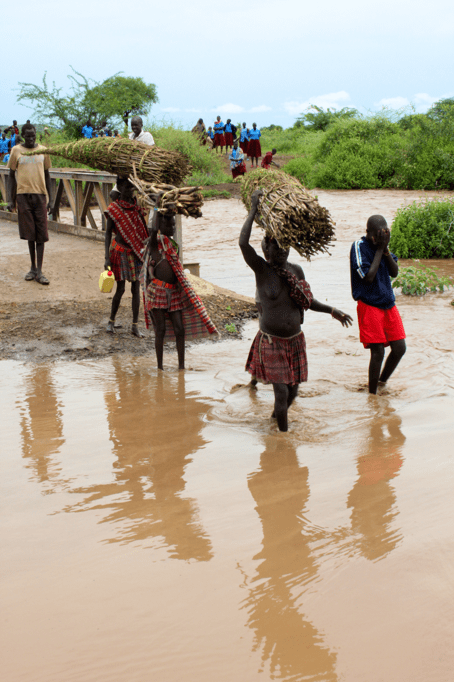
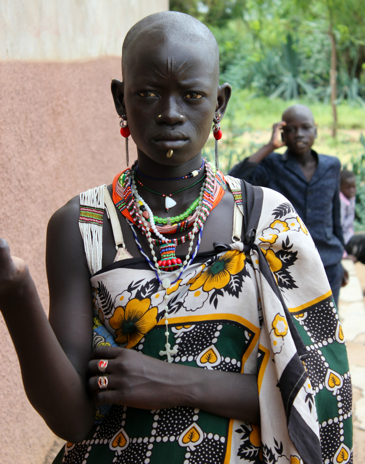
This Toposa girl

I don’t know this Toposa girls name. Here is what I do know about her. 

She is the daughter of a Toposa herdsman. She is about 15 years of age. At a young age her father cut her cheeks and forehead with a knife and filled the wounds with ash from the fire pit. Those are the “beauty” marks you see in the picture. It is an incredibly painful procedure and of course there are no painkillers or treatments to prevent infection. 

She attended St. Bakhita some years ago. She learned to count, to say the alphabet and to write her name. She made friends with girls from many other tribes, the Murle, the Dinke, the Karamajong. She was a happy little girl.

Then one day, she stopped coming to school. When the elders of the school investigated, they learned that her fathers fellow tribesmen humiliated him. They mocked him for allowing his daughter to lose her value as a wife by sending her to school. They asked how he could expect to get a good dowry for her if she became a prostitute. (This is what many Toposa men think of girls who get a basic education). 

So he stopped her attending school.

I see this Toposa girl walk by the school almost every day carrying heavy loads of charcoal or firewood on her head. She carries the load from compound to compound hoping that someone will buy from her. She desperately wants to return to school but cannot. She sees the other girls enjoy the education they have been blessed with. She sees that with the help of the food provided to the school by the World Food Programme, the girls are fed and healthy.

The best that this girl can hope for is that her father will sell her as a wife for a good dowry that will improve her fathers situation and maybe that of her siblings but not hers. She has been sentenced to a life of hardship and toil. She will become a wife at a young age and maybe not the mans first wife. If she is his first wife, she will not be his last wife. She will share the compound she will build alone with the other wives her husband will take. 

Her husband will make her repay the dowry he paid for her by having her enslaved to him for the rest of her life. It will be her responsibility to build the home, to cultivate the crops, to raise her children and the children her husband fathers with his other wives. She will fetch water, cook, clean and try to generate an income for the family.

I really don’t want my posts to sound like those “for $10 a month you can feed a family in Africa” type ads that we see on daytime television. There is nothing anyone can do for this girl. It breaks my heart to know what this girls life is. But I find it infinitely more difficult to deal with the fact that this Toposa girl is exceptional in wanting an education and that many young girls still aspire to the life this Toposa girl has been sentenced to. 

I met this Toposa girl last Sunday. I sat at the very back pew just inside the door and she stood at the door throughout the service. I invited her to sit with me and she cowered behind the door. I asked about her at lunch at lunch and this is what I learned. I also learned that she had gone to see the Ann Grace  and asked her to read the Gospel to her. Ann Grace invited her to come to church and she came.

The welcome feast

On the evening of Sunday September 22nd we were invited to the home of the Ugandan sisters who share the diocese compound. The Brothers were also invited, Brother Mike from New York and Brothers Germay, Rene and Gonzaga, all from the Democratic Republic of Congo. Fathers Tim and John Joe and I made our way there after evening prayer (and once the All-Ireland was over!) to find that some other esteemed guests had been invited also. Zachariah the town chairman, Monica the chairperson of the PTA, Madame Helen from St. Bakhita and Esther Iko who I had first met on my arrival here at her daughter Kulangs funeral.

It transpired that Sister Margaret had gatherered the group of fourteen together in my honour. She made a short introductory speech welcoming me to their home and urging me to feel it to be my home too. 

And what an honour it was.

Sister Anges presented me with a beautiful posy of flowers and a huge hug of welcome. She is young and energetic and always full of life. I hear that she was a very popular radio host in Uganda before she came to South Sudan. Now she teaches the younger girls in St. Bakhita and I can’t help but think how lucky they are to have her.

The feast was fit for a king. There were local dishes from South Sudan and Ugandan dishes prepared by Sister Margaret, Sister Susan and Sister Agnes. I really didn’t know where to start. And the smell!! The room filled with the aroma of meat slowly cooked in a delectable concoction of herbs and spices. We washed it all down with the great treat of bottled soda. 

Conversation was lovely as it tends to be when Zachariah is around. He’s full of life and energy. He is a great town chairman and he works hard to create a better future for the children of this place. 

Desert came disguised. We were to guess what it was – Tim thought it might be our angry cat but I think my guess was closest. I said that whatever was hidden underneath the cloth was sure to be delicious. And it was! We cut the cake together, me, Tim, Zachariah and Monica to a great round of applause. It was a scrumptious ginger sponge cake that had been prepared earlier in the day.

Sister Margaret then asked, ever so officially, for Zachariah to make an address. He spoke of how happy he was that I had come to Narus and how he only hoped that I could stay longer. He made it clear that I was one of them now and that I should call on him day or night if there was something I needed. He wanted me to feel safe here and happy and invited me back next year!

Tims address was next in his capacity as Parish Priest of Narus. He explained that it has been only 6 weeks or so since he had an email from me out of the blue introducing myself. He knew my mother but didn’t know me and in the short time since that email we’ve become good friends. He saw in me someone who wanted to learn more about missionary life and having conferred with John Joe decided he must help me. He knew that St. Bakhita needed a maths teacher and with my having studied maths he felt I’d be a good fit. The timing of my visit was perfect. He welcomed me and wished me well. He sees that this is a journey for me too and sees that I’m very happy here.

And then it was my turn as guest of honour. At this point I was so touched and admittedly a little close to tears. I addressed my friends. I thanked them for the marvellous welcome and wonderful evening but most of all for letting me be part of their lives and the community here in Narus. I told them that they came to me at the right time too. Providence put us all together. I told them, very honestly how happy I am here and how very full of gratitude I am to all of them. I shall miss them all and this life terribly when I have to return to London.

Fr. John Joe closed the addresses with a prayer for me and for all of us. 

Guests drifted away and soon it was time for us to leave too for the short walk back to our house. As I was leaving, another huge hug from Sister Agnes and the sweetest thing – she said “thank you for loving us and St. Bakhita”

And I do. I love them all. I love St Bakhita and my life here. And I am eternally grateful to God or the Universe or whichever power directed me to South Sudan to be surrounded by such love and hope.
My life in Narus

I realise that I haven’t shared much information about my life as it is in Narus. I live in a compound with two priests; Fr. Tim Galvin and Fr. John Joe Garvey from Millstreet in Co. Cork. We have quickly settled into a routine and after just a week we have our own “inside” jokes which to me is the mark of an easy friendship.

Both are excellent company and our conversations at meal times range from the intellectual to the ridiculous.

We rise each morning at about 6am. Fr. Tim says mass at the church and Fr. John Joe says mass at the small chapel on our compound. I normally attend mass with John Joe in the chapel and we are joined by the Nuns and Brothers who also share the compound but live more or less separately to us.

Once mass is over, we three meet for breakfast prepared by our cook Alina. My father will be delighted to hear that we have porridge every morning. The only positive things I can say about porridge is that each bowl brings me one bowl closer to the last one I’ll ever have to eat! Although, I will admit that it helps greatly with my malaria tablet which seems to be almost impossible to swallow.

We then continue about our daily lives. I spend time with my Standard 8 girls in St. Bakhita Girls Primary School. They are desperate for extra tuition and I am very happy to spend as much time as possible with them. They are candidates for State exams this year and maths is a notoriously weak subject for girls in South Sudan so I am proud that they are willing to work so hard. Some of the girls show great potential.

I meet my two Kiltegan Fathers again for lunch after which we hide away from the heat of the day. It gets incredibly hot here – often exceeding 35 degrees Celsius. We study and prepare for our classes. I return to school for extra tuition and I will soon start my classes in Toposa too.

Sometimes, I will accompany Tim as he inspects the work at the St. Bakhita secondary school or visits with parishioners. I really enjoy our late afternoon strolls, no one knows more about Narus or the people here than Tim. It is also very humbling to see the work that he has done here and what has been achieved.

I have made some new friends too and so sometimes in the late afternoon i will spend time with them. Anna Grace is an economics teacher in the secondary school. She is from the Karamajong tribe in Uganda. Her story is incredible and maybe in time and ith her permission I will be able to share that story.

We gather together again form Evening Prayer at about 7pm before sitting for supper together and watching the 8pm news headlines on Al Jazeera, the only channel we get (which frankly is fine by me!). We read and chat about the days events.

The generator goes off at about 9:30pm which leaves us with the less powerful solar lights. At this point I head for bed having decided early on that the safest place to be in the dark in Africa is in my bed with my mosquito net firmly tucked under my mattress!

Soon I will start to help with preparing the classes for confirmation. But that is the typical framework of my day in Narus.

Sent from my iPad

Things I’ve learned in Kenya and South Sudan

1. And this is by far the most important….when Fr. Tim says “I don’t want to scare you but…” The sentence normally ends with something about man eating snakes, spiders with killer bites, scorpions or land mines and so a sensible amount of terror is prudent.

2. In regional airports, there is no check-in. Go to the nearest bar and wait there until you see the plane land. This is the equivalent of having the gate announced. At any rate, it will take them a few minutes to clear the runway of cattle, sheep and goats so you’ll have plenty of time!

3. I can survive without chocolate, wine and my hair straighteners.

4. I am the only person in the world for whom DEET does not work. I am covered in bites and I think every small bug in South Sudan, Kenya and Uganda has had a chomp on some part of me.

5. I will be very happy never to see another bowl of porridge.

6. Using my ipad under the mosquito net at night is a bad idea.

7. That no matter how many times I ask, Tim is not going to allow me to drive the motor bike.

8. It is almost completely pointless to arrive anywhere at the time you’re supposed to be there. Nothing happens here for at least an hour after its supposed to have happened.

9. The cat and I will never be friends.

10. You can always depend on Fr. John Joe to brew an award winning cup of tea.

11. Always keep your eyes open and your mouth closed in the shower 🙂

A short visit to Kapoeta

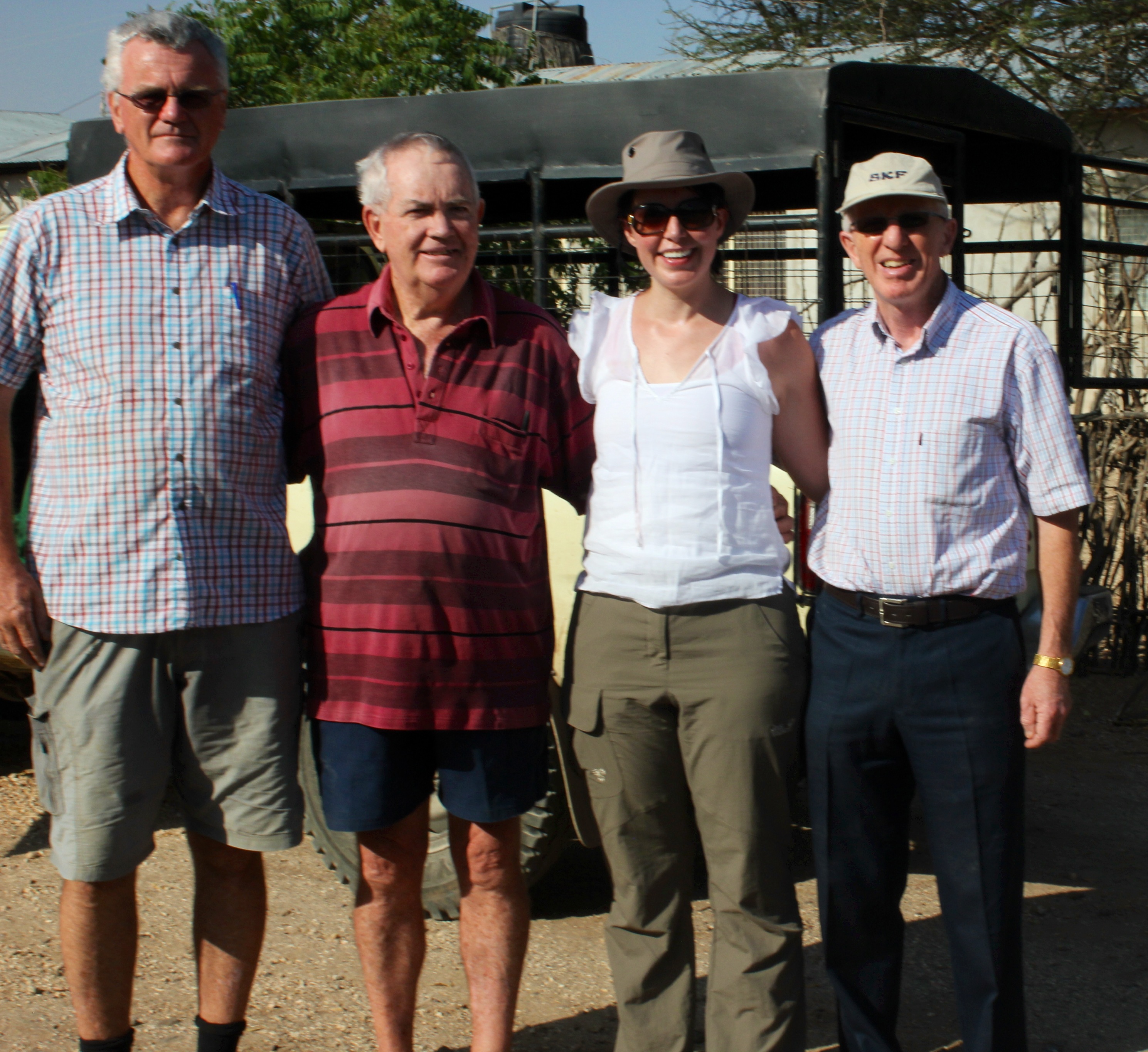
I’m currently in Riwoto visiting John Marren with Tim and John Joe. We drove up together and met John in Kapoeta in the early afternoon. Our pick-up was full with those who had business to do in Kapoeta. It’s about two hour bone shaking drive on terrible roads from Narus to Kapoeta, a fact which became very real when I realised that only services for pregnant women only recently became available in Narus.

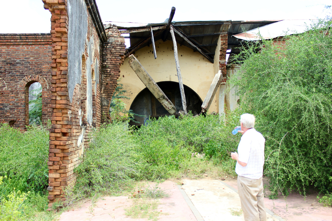
We visited Fr. Tims old parish church which has been destroyed by the Arabic Khartoum government. It was quite moving to see how the church had been desecrated.

From there we had a quick lunch at the Kapoeta “Ritz”…the less said about that the better…suffice to say I saw them skin our lunch….

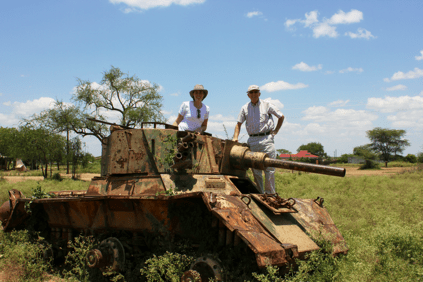
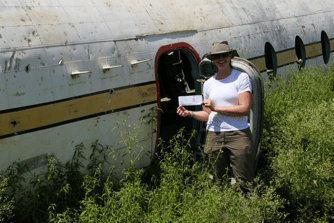
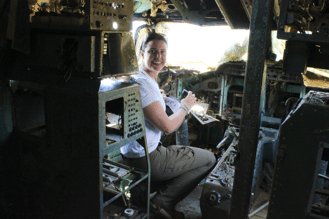
I will leave you to learn the history of Kapoeta yourself but it was ravaged by way and the remnants are still scattered around. It’s all very fine taking pictures and making fun as we did below but the reality is rather more serious. There are still land mines which frequently cause destruction and death scattered around the countryside.

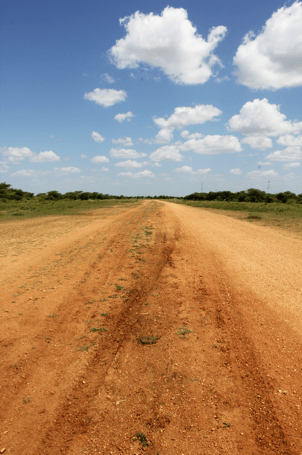
We then drove to Riwoto which was another bone shaking drive. The highlight of which was the part of the route that took us directly down the runway of Kapoeta airport. This airport is still in use. There are people employed to clear the runway from cars and animals when a plane comes in to land. Often a plan will have to enter into a holding pattern until the runway is clear!

Another remnant from the war below – I was lucky to have remembered my boarding pass!

Fr. Tim arrives and we drive across the desert from Lodwar to Lokichoggio

I had not yet met my host for this trip and the Parish Priest of Narus – Fr. Tim Galvin from Brosna in County Kerry – a neighbouring parish to that that in which I grew up. He journeyed for 10 hours to meet me in Lodwar in northern Kenya and to escort Fr. Marren and I safely to Narus in South Sudan. It was a great reunion when he arrived and I was very happy to finally meet him. A little older than my brothers, he has quickly taken the place as my South Sudanese brother!

We spent a very enjoyable evening in Lodwar with Fr. John Callaghan; a delicious supper followed by chocolate and a nice single malt on the veranda while putting the world to rights!

The climate in Lodwar is very different to Nairobi. It is desert and the heat is oppressive. It is dusty and barren. In the morning I attended my first Swahili mass read by Fr. John Callaghan who hails from Charleville. I was the only white person amount a congregation of Turkana women in their beaded finery.

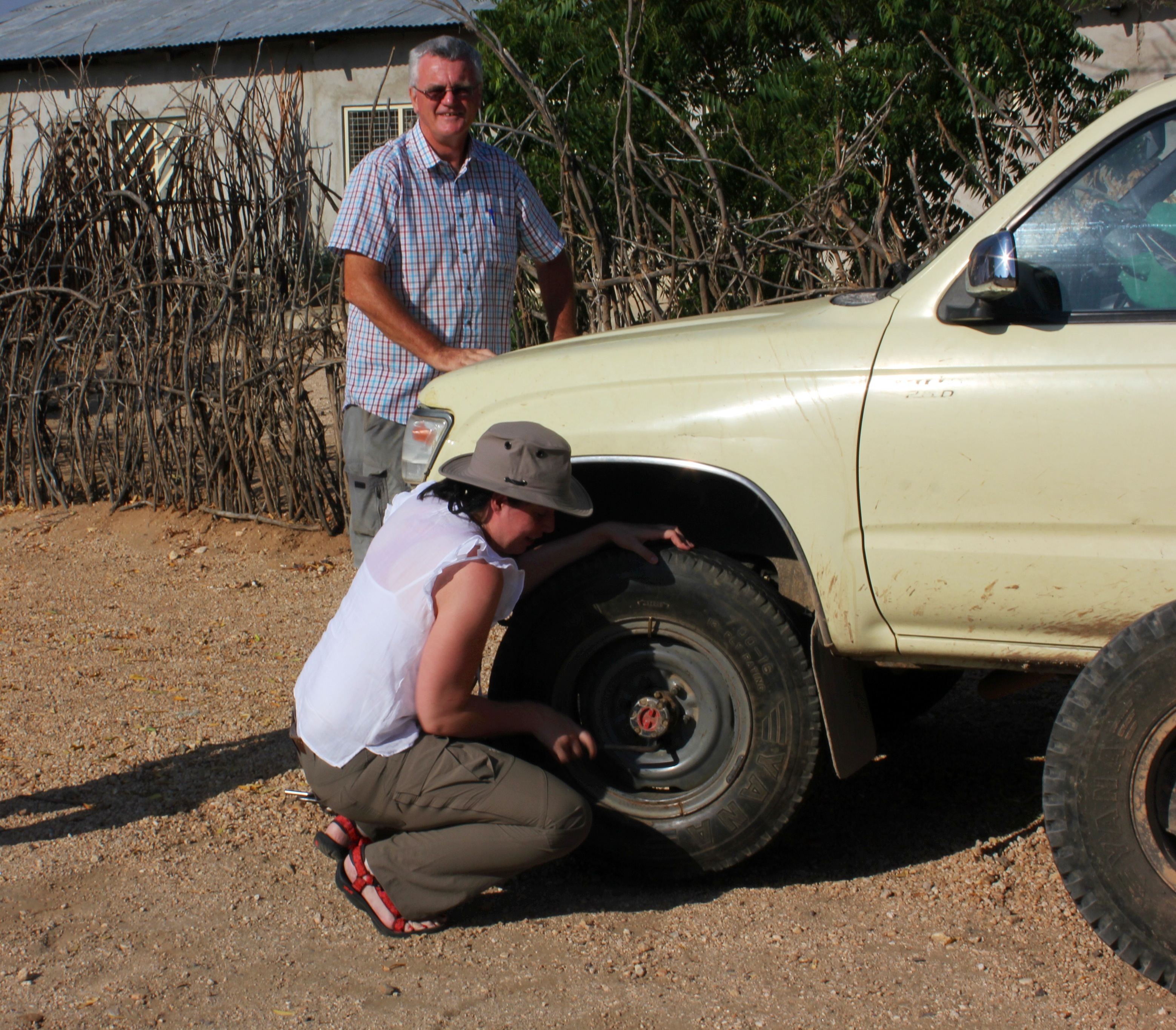
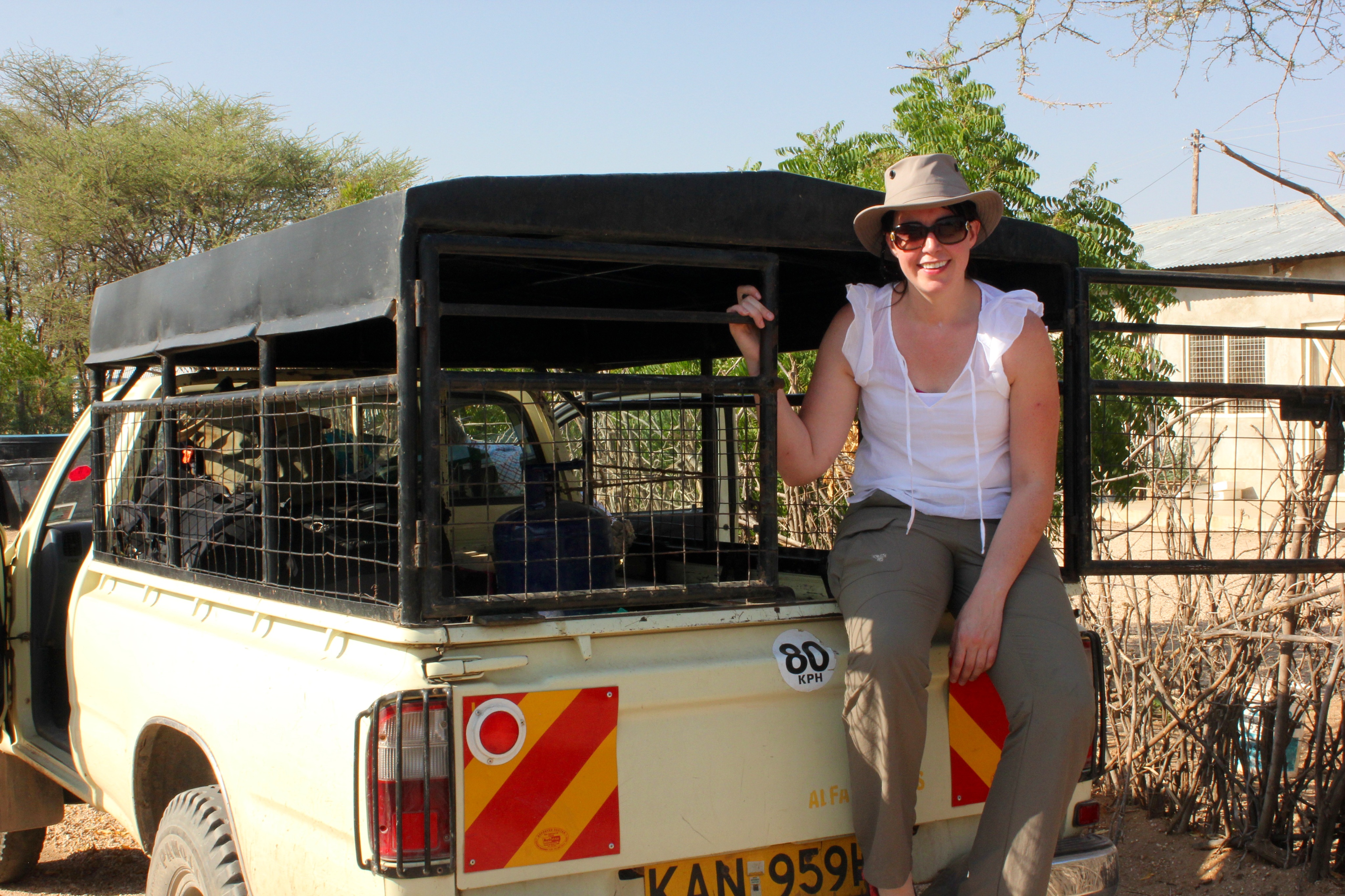
Our plan was to leave immediately after breakfast at about 8am but a puncture scuppered that cunning plan.

So the boys left me to change the tyre (not really but I did help!) and we took off to garage in Lodwar to have the tyre repaired.

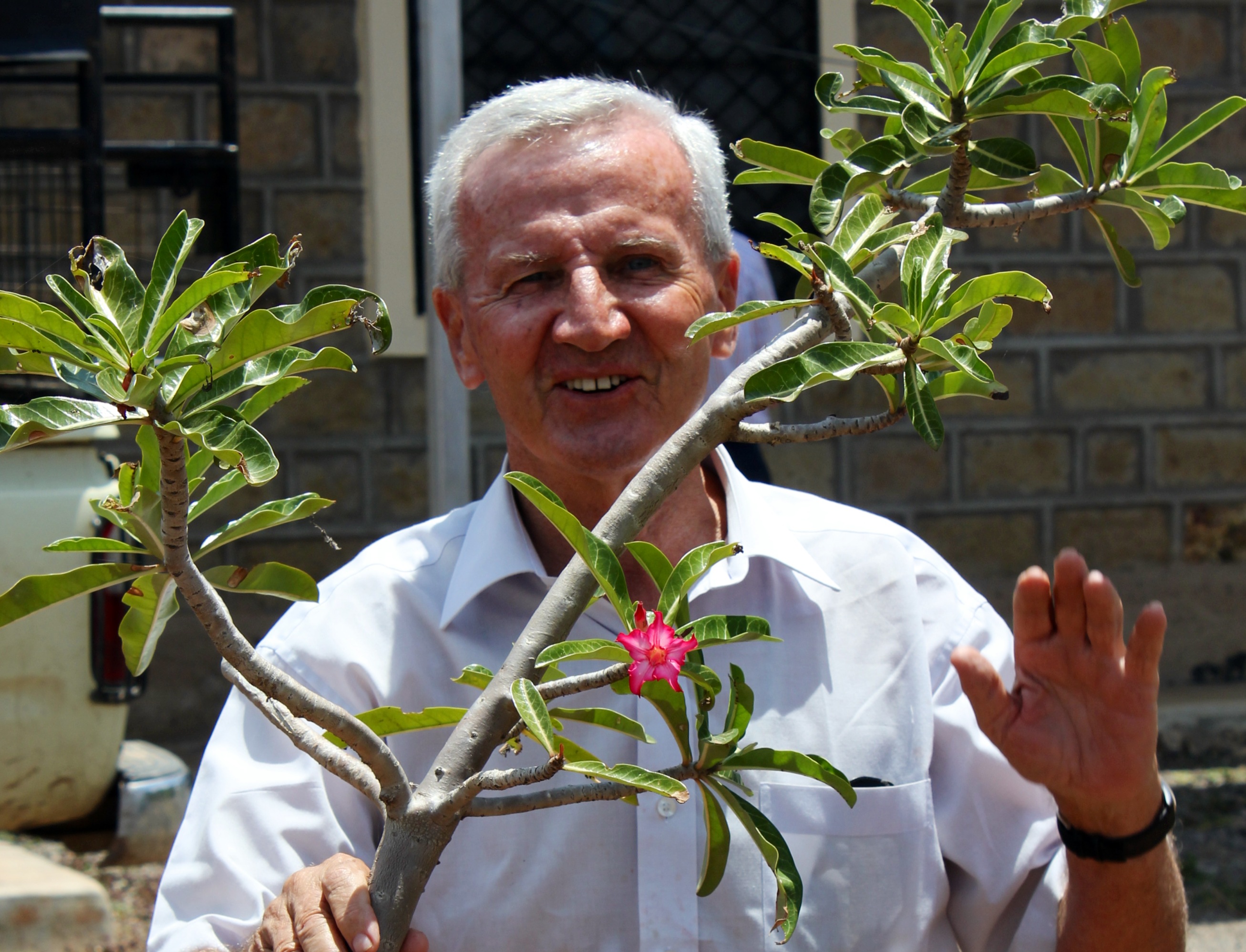
At this point our plan to cross the border and make it to Narus in South Sudan was impossible so we decided to briefly stop at a mission outpost before continuing to Lokichogio to spend the night. Fr. Dessie Miller has a mission is in Kalabyei which is between Lodwar and Lokichoggio in Kenya. He has lived in Turkana for 45 years and has a beautiful church in a hill top in the desert. Rather aptly it is named St. Benedicts. The picture below shows Fr. Dessie Miller showing off the first of his beautiful desert roses.

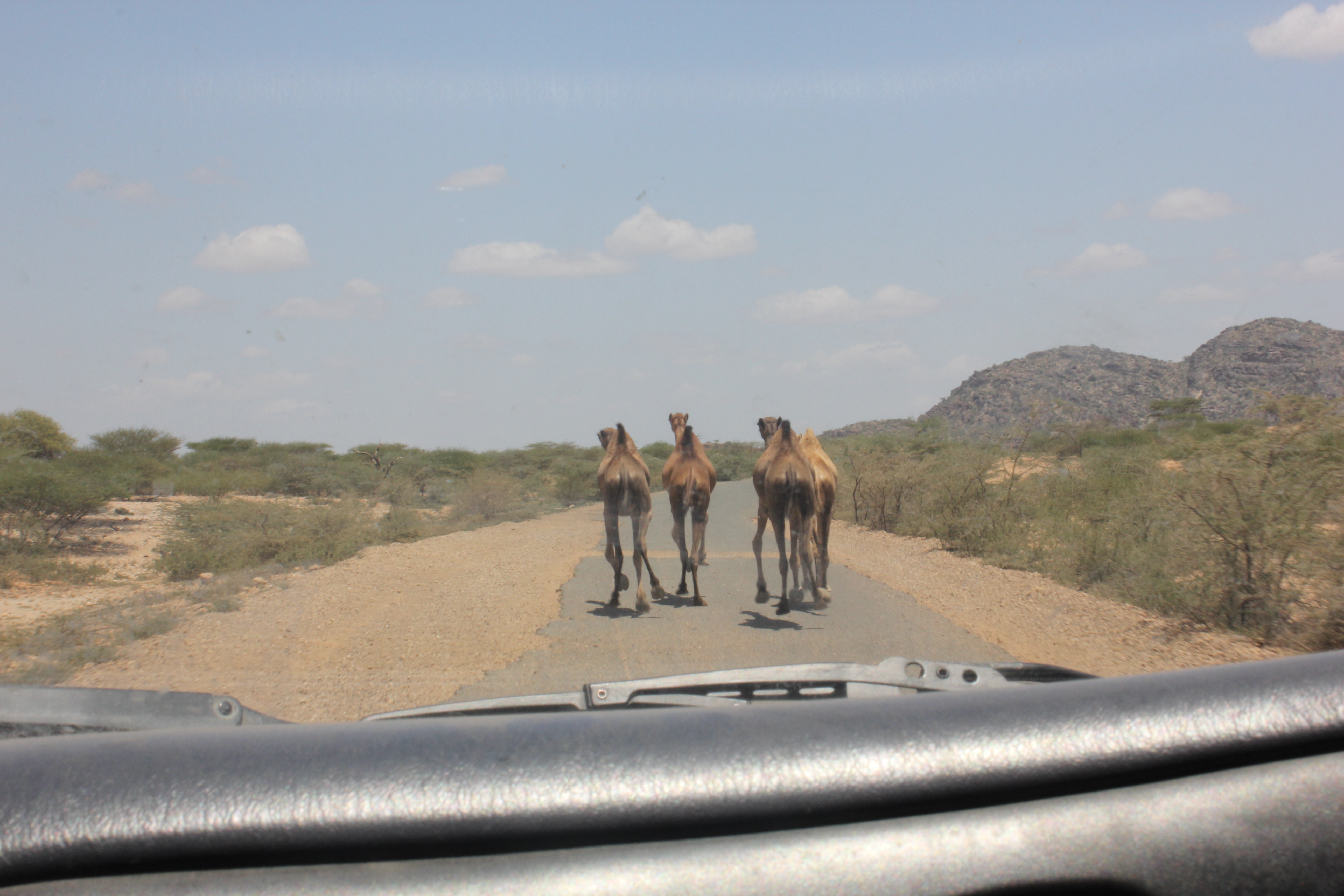
After a delicious lunch of ice cold melon we continued on our way. It was a welcome refreshment as it was 32 degrees in the shade! You can imagine how hot it was in the jeep with the three of us in the front! The terrain was difficult too, not only were the roads almost non-existent but we had to negotiate the wild camels too. They didn’t seem to realise that we had places to go and people to see!

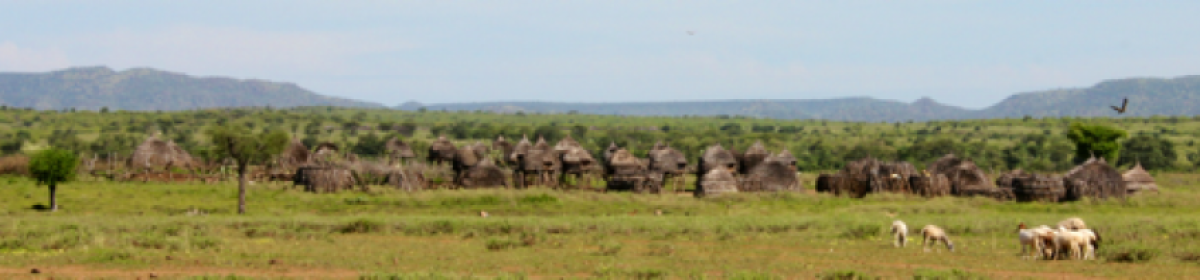
When we finally arrived at Lokichoggio, exhausted from our journey, it was lovely to meet Fr. Tom Laffan. Another limerick man. After some tea, he invited me to join him whilevhe said mass at one of the Turkana villages about 30 minutes drive away. I’m so delighted I joined. I got to see a traditional Turkana village and I think I was one of the very few white people other than Fr. Tom that the villagers had seen since the NGOs left.

The mass was read in Turkana (my second mass if the day and I didn’t understand a word of either!). It was like nothing I had ever seen before. The congregation was almost exclusively women. At that time the men are typically still grazing the livestock.

At the end, Fr. Tom introduced me to the congregation and I was able to take some pictures. I was really taken by the experience if sharing the same sacrament with people so different to me. It showed me that standing before the altar, we are all the same

Welcome to South Sudan Helena Eireannach

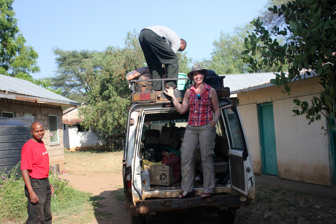
We left on the final leg of our long journey to Narus on The morning of Saturday Septemer 7th. Our jeep was packed full but thankfully there were no punctures to delay us!

First arriving at the Kenyan border we were “checked out” of Kenya before continuing the mile or so to the South Sudan border. Not only crossing country borders, we were crossing from Turkana territory to Toposa territory. The two tribes have a history of war but there is peace now and this is a great relief to both tribes.

Outside the Kenyan border control. A young Turkana woman sat with a small purse. She entered into a colourful conversation with John Marren and it was a little while before I realised that this was the Kenyan borders answer to a Bureau de Change! There was a lot of negotiation but eventually the two parties came to a deal. Fr. John walked away and commented to me “now that’s what I call outsider trading”!

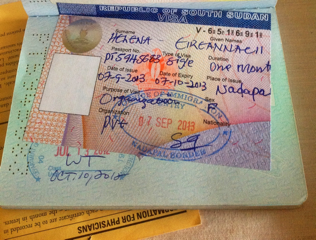
We continued to the South Sudan border and while Fr. Tim mad the necessary arrangements to get the truck across the border John Marren accompanied me to get my Visa. After what seemed like an eternity (despite the excellent company I hasten to add) and $100 later I was the proud owner of a South Sudan residents permit valid for one month. Visas are only issued monthly and it’s $100 each time….nice work if you can get it!!!

It was a jubilant return and there were celebratory hugs when Fr. Tim officially welcomed me to South Sudan. I was on his turf now!! We were about a mile into Suth Sudan when we realised that the official had renamed me! Misreading my Nationality for my surname, he has renamed me “Helena Eireannach”which  means “Irish Helena”!!! I’m so proud to be South Sudans only Irish Helena!!