The funeral of Donna Kulang Yiko

This post is long over due and it has been sitting in my drafts since my first day in Narus. This was a difficult post to write. 

We had left Lokichoggio early on the morning of Saturday September 7th arriving at the border and crossing safely. The journey from Nadapal which is the town at the border to Narus takes about 45 minutes. 

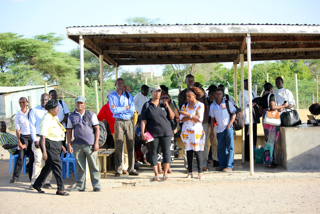
We arrived, I got settled in and we met for a nice cup of tea. Fr. Tim and Fr. John Joe had been asked to say funeral prayers for a local girl who had died at the age of just 13. We travelled the short distance to the family’s small compound and I felt a little unsure of what to expect. At one end of the compound, a makeshift shelter had been constructed to protect from the punishing afternoon sun. An altar had been placed under the shelter facing the main enclosure of the compound.

I think there may have been about 100 people in the small compound and after greeting the parents of the dead girl we were directed to sit under the shelter. I was struck that with the exception of me and the Headmistress of St. Bakhita Primary School, the shelter was exclusively for men. It became clear that Sister. Margaret and I had been afforded the position of guests at the prayers. All the other women sat on wraps laid on the dusty ground in the centre of the compound, finding what shade they could.

Fr. Tim led the prayers and it amazed me to hear him relate so effortlessly to the family in both Juba Arabic and the local Toposa dialect. It was a simple ceremony with beautiful music provided by some of my now students and other members of the church here.

I knew that the girl had died about two weeks before and I’m not sure whether I expected to see a casket or not but I do remember wondering whether Kulang had already been buried and if so, where.

The answer came immediately after the funeral mass was over. Fr. Tim went to bless the compound and the grave. When he walked towards the corner of the compound where Kulang was buried there was a flurry of activity to clear the way for him. I found it hard to come to terms with the fact that the young girl had been buried almost immediately just a few feet from where she had grown up with her grandmother. Tradition (and I suppose practicality) demands that once a person dies here they must be buried as soon as possible. Tim blessed each of the other buildings in the compound before returning to hear the addresses by the elders of the various tribes in attendance. 

The addresses were given in Arabic or Toposa and were translated as necessary. One in particular struck me so deeply. One woman who represented the elders of what I think was the Dinka tribe said that the only reason that the family should grieve was because Kulang had not left a child. This girl was thirteen years old. This was my first real taste of how young girls are perceived in South Sudan.

There were a number of other addresses and about 45 minutes later we were invited to wash our hands and share a meal. Tim and John Joe were directed to an urn from which clean water flowed to wash hands before being served a meal fit for a king. I was instructed to follow the priests and Sister Margaret followed me.

The food was incredible. I have absolutely no idea what it was but we ate with our hands and licked our fingers clean!

I admit to feeling somewhat uncomfortable with my position of guest, I felt more like an intruder or voyeur on this day in the family’s life. I’m very grateful for their hospitality though and for their welcome.
My life in Narus

I realise that I haven’t shared much information about my life as it is in Narus. I live in a compound with two priests; Fr. Tim Galvin and Fr. John Joe Garvey from Millstreet in Co. Cork. We have quickly settled into a routine and after just a week we have our own “inside” jokes which to me is the mark of an easy friendship.

Both are excellent company and our conversations at meal times range from the intellectual to the ridiculous.

We rise each morning at about 6am. Fr. Tim says mass at the church and Fr. John Joe says mass at the small chapel on our compound. I normally attend mass with John Joe in the chapel and we are joined by the Nuns and Brothers who also share the compound but live more or less separately to us.

Once mass is over, we three meet for breakfast prepared by our cook Alina. My father will be delighted to hear that we have porridge every morning. The only positive things I can say about porridge is that each bowl brings me one bowl closer to the last one I’ll ever have to eat! Although, I will admit that it helps greatly with my malaria tablet which seems to be almost impossible to swallow.

We then continue about our daily lives. I spend time with my Standard 8 girls in St. Bakhita Girls Primary School. They are desperate for extra tuition and I am very happy to spend as much time as possible with them. They are candidates for State exams this year and maths is a notoriously weak subject for girls in South Sudan so I am proud that they are willing to work so hard. Some of the girls show great potential.

I meet my two Kiltegan Fathers again for lunch after which we hide away from the heat of the day. It gets incredibly hot here – often exceeding 35 degrees Celsius. We study and prepare for our classes. I return to school for extra tuition and I will soon start my classes in Toposa too.

Sometimes, I will accompany Tim as he inspects the work at the St. Bakhita secondary school or visits with parishioners. I really enjoy our late afternoon strolls, no one knows more about Narus or the people here than Tim. It is also very humbling to see the work that he has done here and what has been achieved.

I have made some new friends too and so sometimes in the late afternoon i will spend time with them. Anna Grace is an economics teacher in the secondary school. She is from the Karamajong tribe in Uganda. Her story is incredible and maybe in time and ith her permission I will be able to share that story.

We gather together again form Evening Prayer at about 7pm before sitting for supper together and watching the 8pm news headlines on Al Jazeera, the only channel we get (which frankly is fine by me!). We read and chat about the days events.

The generator goes off at about 9:30pm which leaves us with the less powerful solar lights. At this point I head for bed having decided early on that the safest place to be in the dark in Africa is in my bed with my mosquito net firmly tucked under my mattress!

Soon I will start to help with preparing the classes for confirmation. But that is the typical framework of my day in Narus.

Sent from my iPad

Things I’ve learned in Kenya and South Sudan

1. And this is by far the most important….when Fr. Tim says “I don’t want to scare you but…” The sentence normally ends with something about man eating snakes, spiders with killer bites, scorpions or land mines and so a sensible amount of terror is prudent.

2. In regional airports, there is no check-in. Go to the nearest bar and wait there until you see the plane land. This is the equivalent of having the gate announced. At any rate, it will take them a few minutes to clear the runway of cattle, sheep and goats so you’ll have plenty of time!

3. I can survive without chocolate, wine and my hair straighteners.

4. I am the only person in the world for whom DEET does not work. I am covered in bites and I think every small bug in South Sudan, Kenya and Uganda has had a chomp on some part of me.

5. I will be very happy never to see another bowl of porridge.

6. Using my ipad under the mosquito net at night is a bad idea.

7. That no matter how many times I ask, Tim is not going to allow me to drive the motor bike.

8. It is almost completely pointless to arrive anywhere at the time you’re supposed to be there. Nothing happens here for at least an hour after its supposed to have happened.

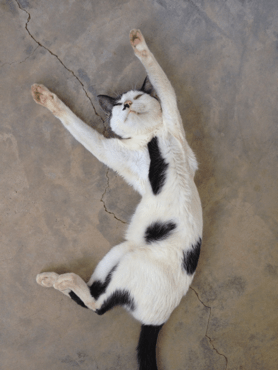
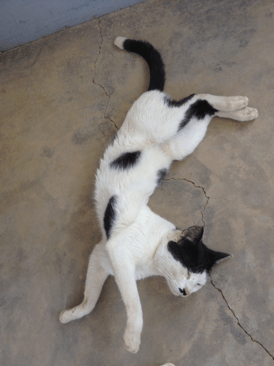
9. The cat and I will never be friends.

10. You can always depend on Fr. John Joe to brew an award winning cup of tea.

11. Always keep your eyes open and your mouth closed in the shower 🙂

A short visit to Kapoeta

I’m currently in Riwoto visiting John Marren with Tim and John Joe. We drove up together and met John in Kapoeta in the early afternoon. Our pick-up was full with those who had business to do in Kapoeta. It’s about two hour bone shaking drive on terrible roads from Narus to Kapoeta, a fact which became very real when I realised that only services for pregnant women only recently became available in Narus.

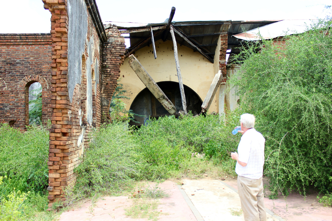
We visited Fr. Tims old parish church which has been destroyed by the Arabic Khartoum government. It was quite moving to see how the church had been desecrated.

From there we had a quick lunch at the Kapoeta “Ritz”…the less said about that the better…suffice to say I saw them skin our lunch….

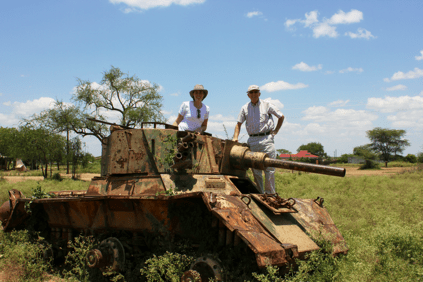
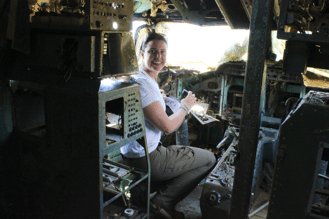
I will leave you to learn the history of Kapoeta yourself but it was ravaged by way and the remnants are still scattered around. It’s all very fine taking pictures and making fun as we did below but the reality is rather more serious. There are still land mines which frequently cause destruction and death scattered around the countryside.

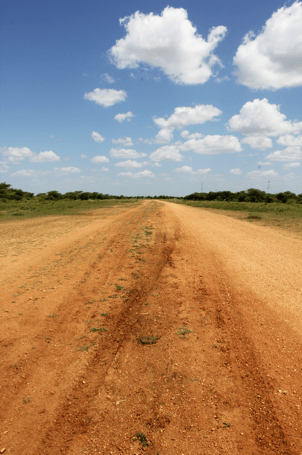
We then drove to Riwoto which was another bone shaking drive. The highlight of which was the part of the route that took us directly down the runway of Kapoeta airport. This airport is still in use. There are people employed to clear the runway from cars and animals when a plane comes in to land. Often a plan will have to enter into a holding pattern until the runway is clear!

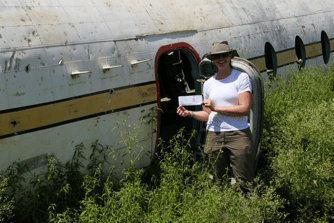
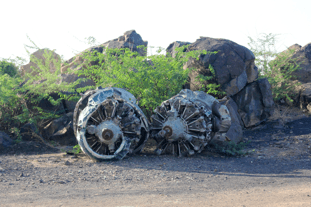
Another remnant from the war below – I was lucky to have remembered my boarding pass!

Disconnected!

Well….a very quick post from me to apologise for the feast/famine nature of my posts. Internet connectivity in Narus is difficult and I am currently in Riwoto visiting with Fr. John Marren who has Internet so I’m making the most of it! 

I know that the posts are slightly out of chronological order but I’ll try to capture and share my experiences none the less. So bear with me if things jump around a little bit 🙂

Fr. Tim arrives and we drive across the desert from Lodwar to Lokichoggio

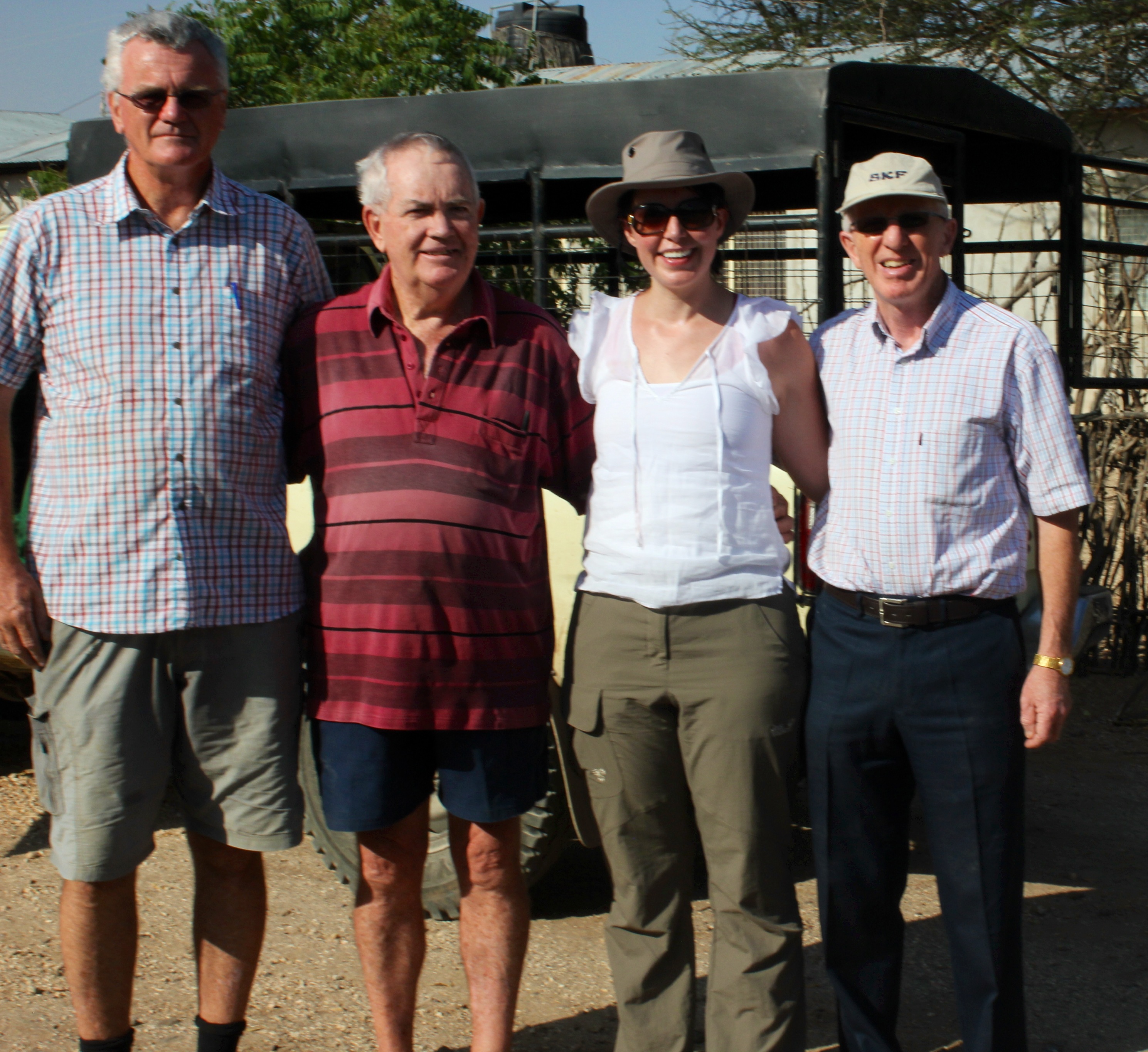
I had not yet met my host for this trip and the Parish Priest of Narus – Fr. Tim Galvin from Brosna in County Kerry – a neighbouring parish to that that in which I grew up. He journeyed for 10 hours to meet me in Lodwar in northern Kenya and to escort Fr. Marren and I safely to Narus in South Sudan. It was a great reunion when he arrived and I was very happy to finally meet him. A little older than my brothers, he has quickly taken the place as my South Sudanese brother!

We spent a very enjoyable evening in Lodwar with Fr. John Callaghan; a delicious supper followed by chocolate and a nice single malt on the veranda while putting the world to rights!

The climate in Lodwar is very different to Nairobi. It is desert and the heat is oppressive. It is dusty and barren. In the morning I attended my first Swahili mass read by Fr. John Callaghan who hails from Charleville. I was the only white person amount a congregation of Turkana women in their beaded finery.

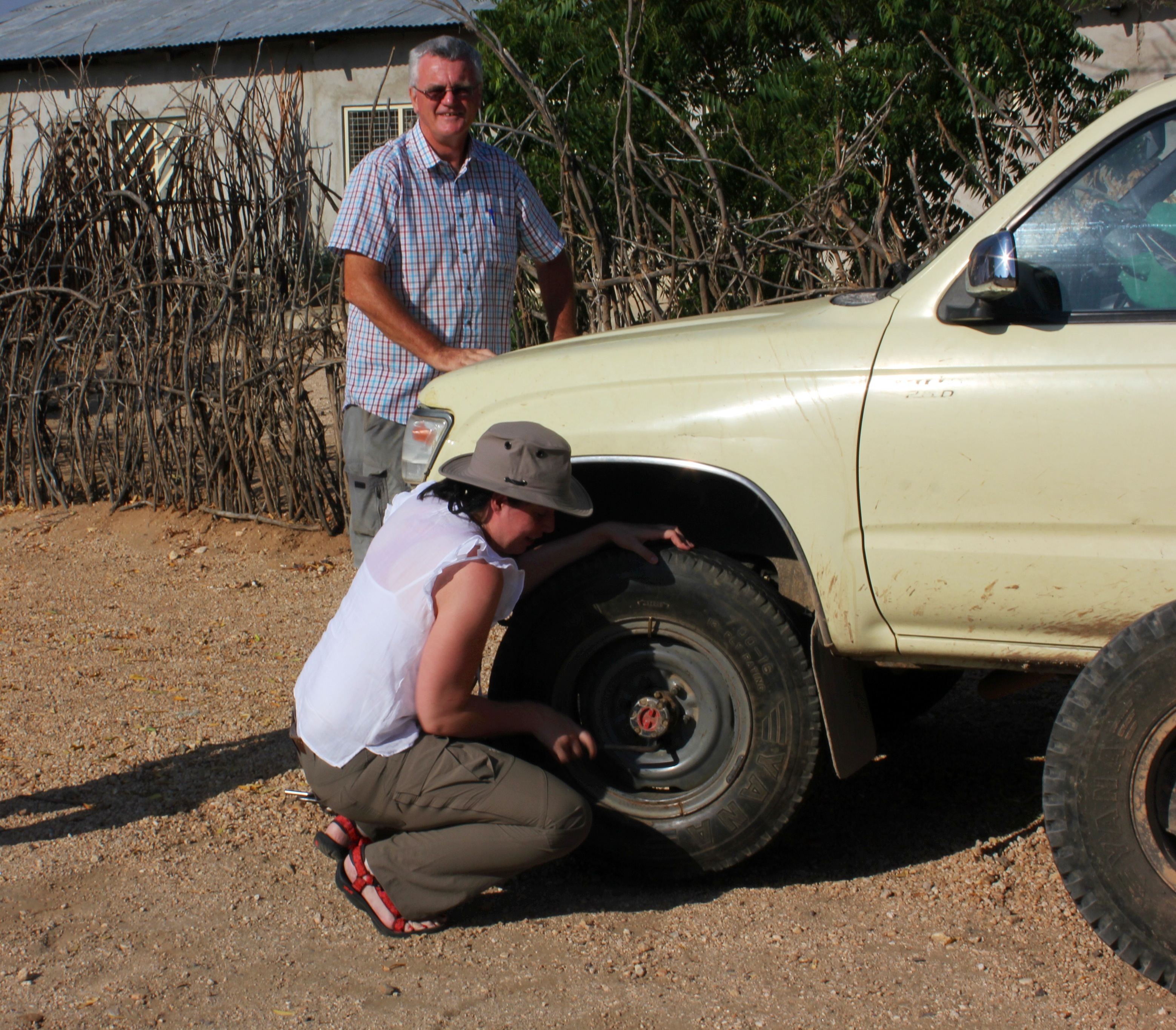
Our plan was to leave immediately after breakfast at about 8am but a puncture scuppered that cunning plan.

So the boys left me to change the tyre (not really but I did help!) and we took off to garage in Lodwar to have the tyre repaired.

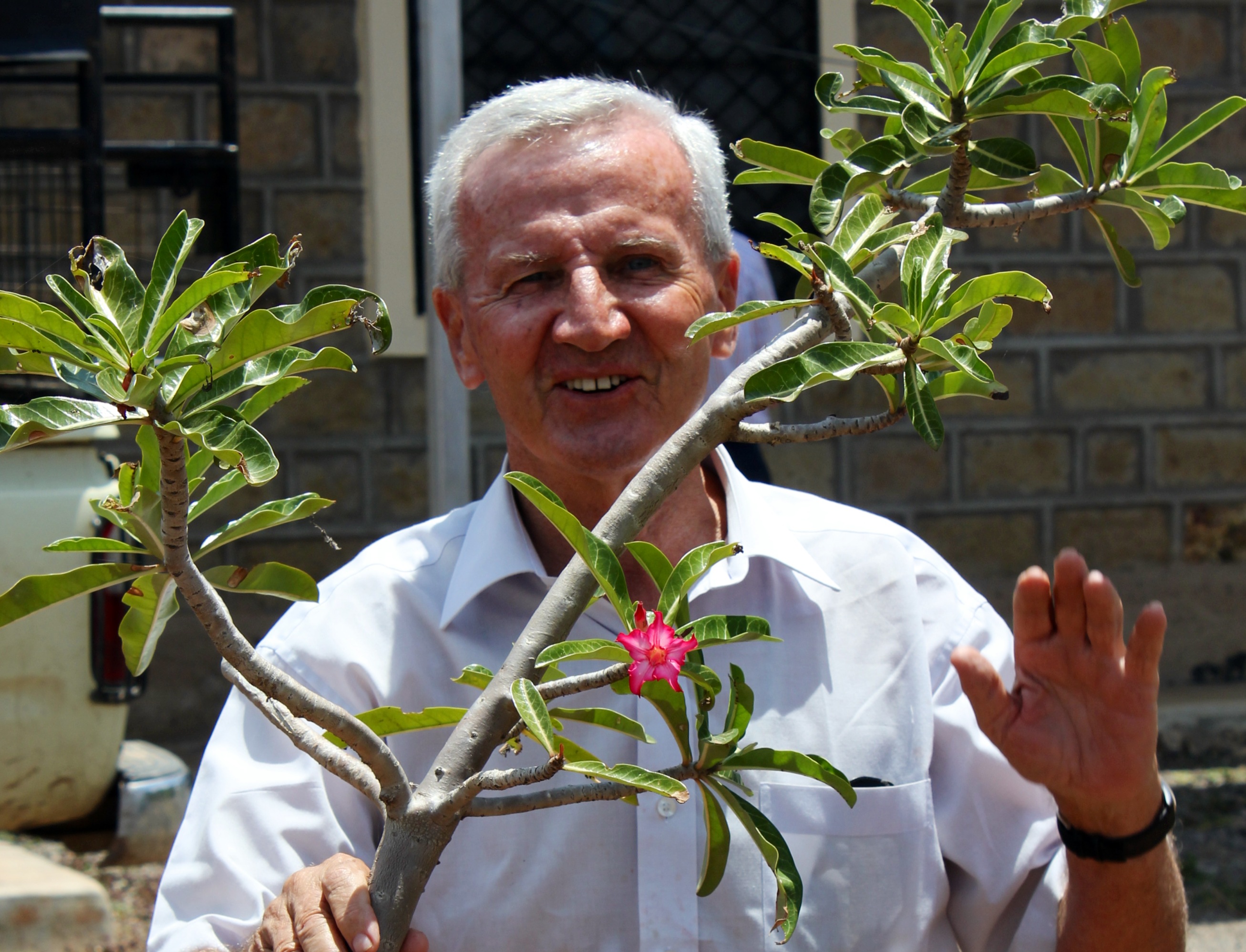
At this point our plan to cross the border and make it to Narus in South Sudan was impossible so we decided to briefly stop at a mission outpost before continuing to Lokichogio to spend the night. Fr. Dessie Miller has a mission is in Kalabyei which is between Lodwar and Lokichoggio in Kenya. He has lived in Turkana for 45 years and has a beautiful church in a hill top in the desert. Rather aptly it is named St. Benedicts. The picture below shows Fr. Dessie Miller showing off the first of his beautiful desert roses.

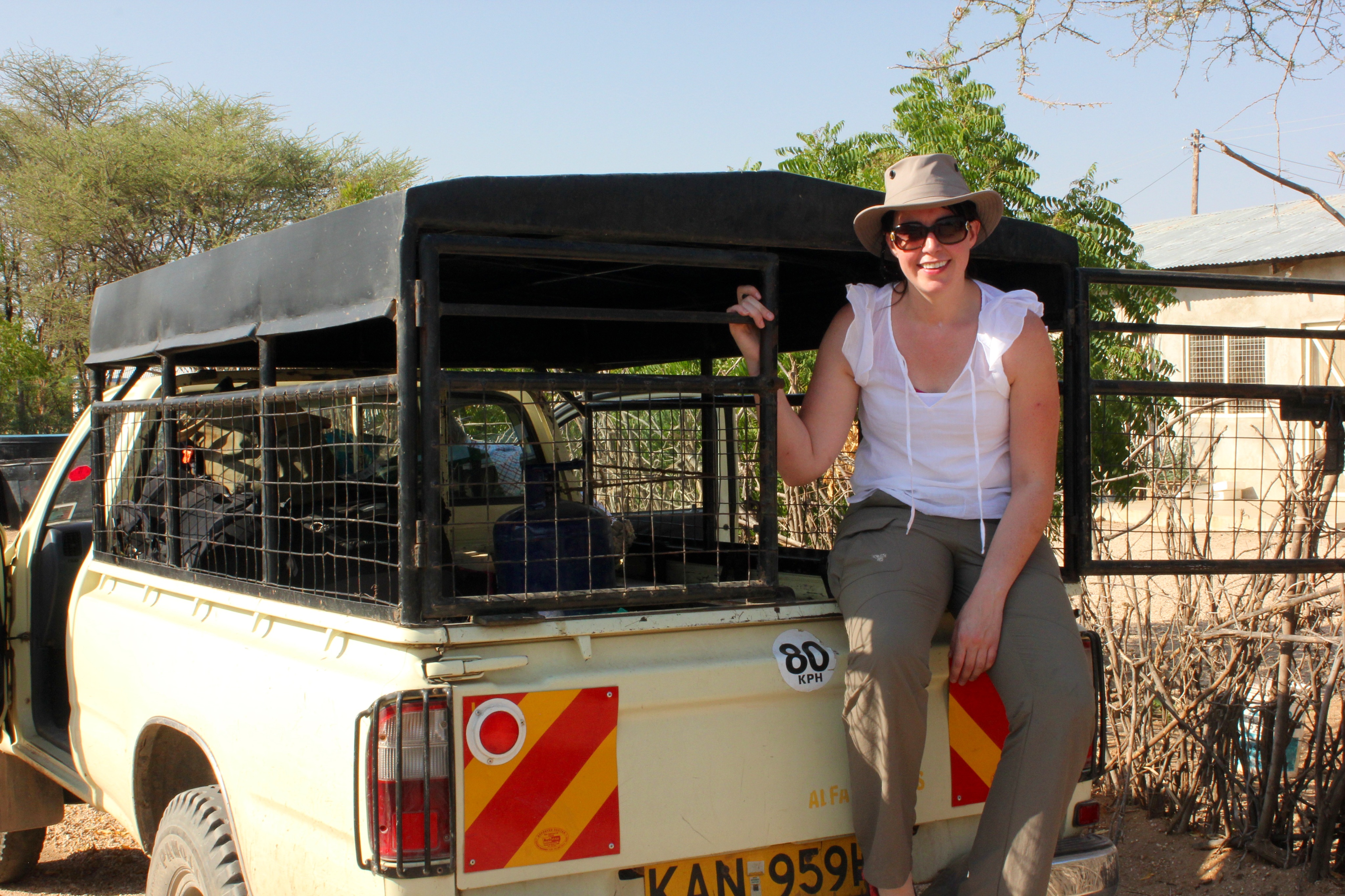
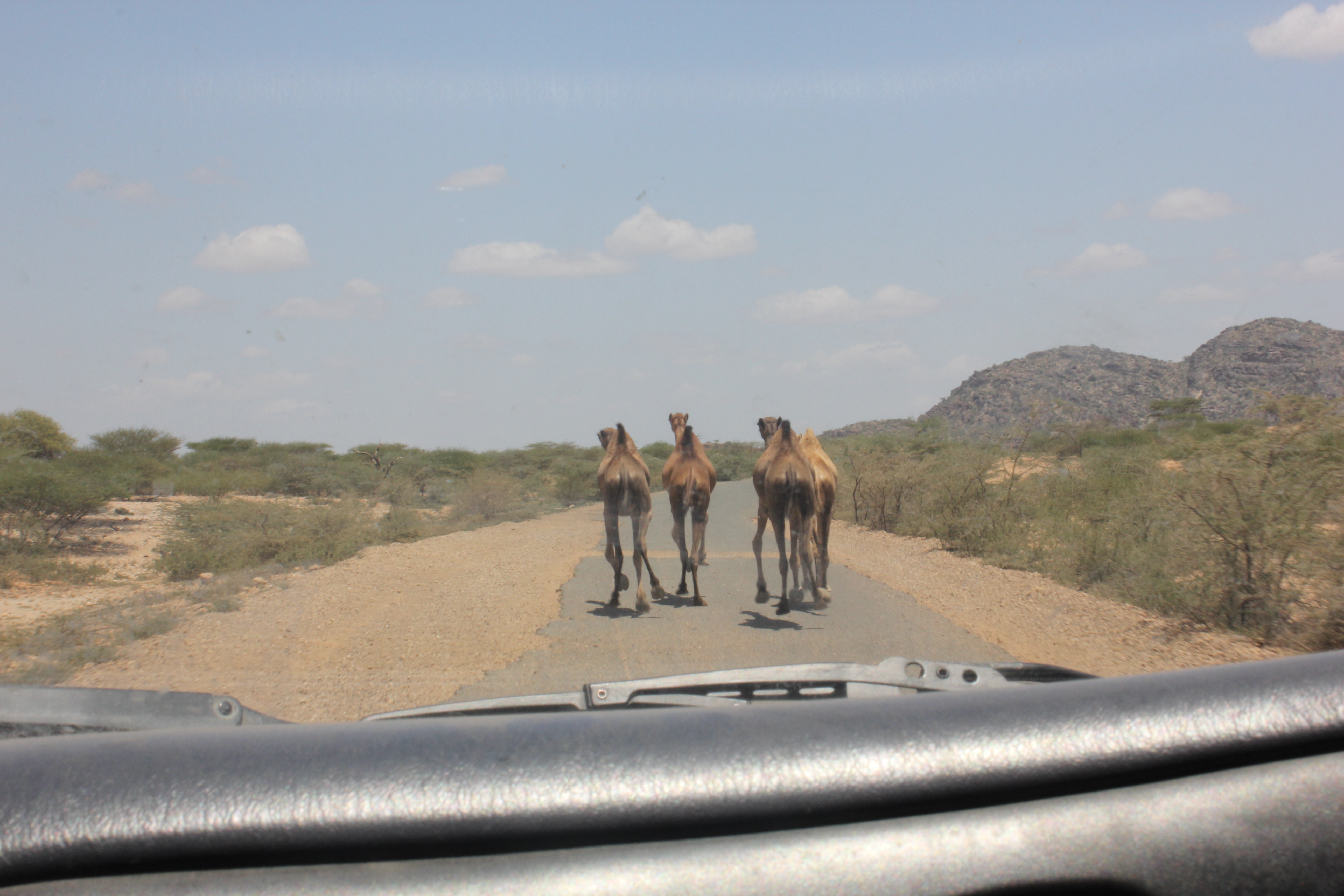
After a delicious lunch of ice cold melon we continued on our way. It was a welcome refreshment as it was 32 degrees in the shade! You can imagine how hot it was in the jeep with the three of us in the front! The terrain was difficult too, not only were the roads almost non-existent but we had to negotiate the wild camels too. They didn’t seem to realise that we had places to go and people to see!

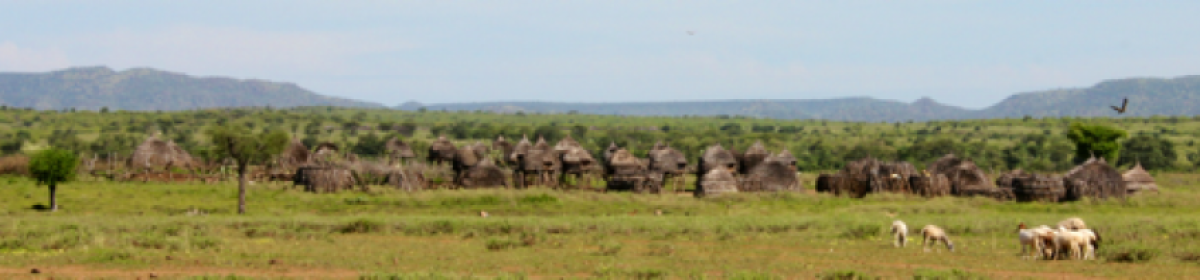
When we finally arrived at Lokichoggio, exhausted from our journey, it was lovely to meet Fr. Tom Laffan. Another limerick man. After some tea, he invited me to join him whilevhe said mass at one of the Turkana villages about 30 minutes drive away. I’m so delighted I joined. I got to see a traditional Turkana village and I think I was one of the very few white people other than Fr. Tom that the villagers had seen since the NGOs left.

The mass was read in Turkana (my second mass if the day and I didn’t understand a word of either!). It was like nothing I had ever seen before. The congregation was almost exclusively women. At that time the men are typically still grazing the livestock.

At the end, Fr. Tom introduced me to the congregation and I was able to take some pictures. I was really taken by the experience if sharing the same sacrament with people so different to me. It showed me that standing before the altar, we are all the same

Welcome to South Sudan Helena Eireannach

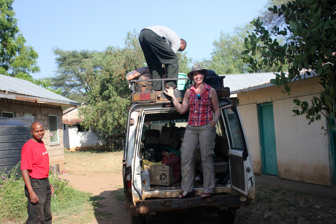
We left on the final leg of our long journey to Narus on The morning of Saturday Septemer 7th. Our jeep was packed full but thankfully there were no punctures to delay us!

First arriving at the Kenyan border we were “checked out” of Kenya before continuing the mile or so to the South Sudan border. Not only crossing country borders, we were crossing from Turkana territory to Toposa territory. The two tribes have a history of war but there is peace now and this is a great relief to both tribes.

Outside the Kenyan border control. A young Turkana woman sat with a small purse. She entered into a colourful conversation with John Marren and it was a little while before I realised that this was the Kenyan borders answer to a Bureau de Change! There was a lot of negotiation but eventually the two parties came to a deal. Fr. John walked away and commented to me “now that’s what I call outsider trading”!

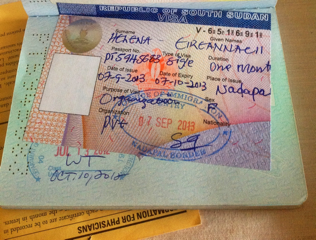
We continued to the South Sudan border and while Fr. Tim mad the necessary arrangements to get the truck across the border John Marren accompanied me to get my Visa. After what seemed like an eternity (despite the excellent company I hasten to add) and $100 later I was the proud owner of a South Sudan residents permit valid for one month. Visas are only issued monthly and it’s $100 each time….nice work if you can get it!!!

It was a jubilant return and there were celebratory hugs when Fr. Tim officially welcomed me to South Sudan. I was on his turf now!! We were about a mile into Suth Sudan when we realised that the official had renamed me! Misreading my Nationality for my surname, he has renamed me “Helena Eireannach”which  means “Irish Helena”!!! I’m so proud to be South Sudans only Irish Helena!!

The journey to Lodwar

John and I left together for the next stage of our journey to Narus on Thursday morning. Joseph drove us to the airport – which sounds like a simple job! It’s not…driving in Nairobi is not for the faint of heart. Joseph got us there safely which was a huge a achievement!

The terminal in Nairobi burned some weeks back so the terminal for domestic departures is the cargo terminal. We arrived and having had a nice cup if tea and a good chat, boarded the flight to Lodwar. The plane had one quick stop to make in Eldoret close to the Ugandan border before continuing to Lodwar.

Lodwar was an eye opener and I definitely felt as though I was really in Africa now.

The plane we arrived in had 37 seats and landed on the runway on time. It was in incredible journey, leaving the metropolis of Nairobi, flying over the Rift Valley, the green lands of Eldoret which looked just like home before reaching the desert. All in just under 2 hours.

This is the arrivals and departures “lounge” at Lodwar. I wish I had taken a picture of the luggage carousel which was really a very big wheel barrow around which a scrum took place!

Not sure if the pilot meant to take these bits with him….

36 hours in Nairobi

I spent a most enjoyable 36 hours in Nairobi at the St. Patrick’s regional house. Fr. John Marren welcomed me at the airport with Patrick and our driver Joseph both elevated to hero status in my books for different reasons: Joseph for his skill at negotiating the Nairobi traffic and John Marren for being the most enjoyable travel companion with a great sense of humour and cracking banter! 

We arrived at the mission house late on Tuesday night. I attended my first mass in Africa read by Fr. Niall on Wednesday morning. It was lovely to see the beautiful little oratory full. 

Wednesday was spent recovering from the flight but also preparing for the next leg of our trip the following day which would take us from Nairobi to Lodwar. I did find time to have a nice long coffee break with Fr. Niall and Im pretty sure we put the world to right! My friend Jo is a teacher in the International School in Nairobi so it was lovely to see her and enjoy some good wine before my time in Nairobi was over. 

What struck me about Nairobi was the great divide between rich and poor. One million people live in a slum just about a mile from the mission house called Kibera. It is normal to see small children begging amongst the gridlocked traffic and young girls on street corners. While we had dinner at a very nice restaurant the next table was occupied by two men and a young girl who was clearly a prostitute. The only way out of that life for these children is education.